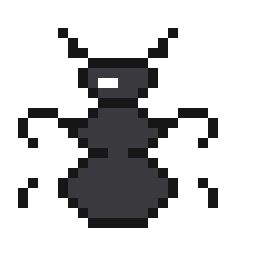
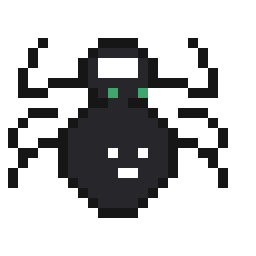
No. Spiders are arachnids, a separate class of animals from insects, and the difference is easy to see once you know where to look. Here is the three-second test, then the longer story of why it matters for how a spider lives, and why it does not matter at all for whether you should worry about one.
The three-second test
| Insect | Spider (arachnid) | |
|---|---|---|
| Legs | 6 | 8 |
| Body parts | 3: head, thorax, abdomen | 2: cephalothorax (head and chest fused), abdomen |
| Antennae | 2 | None |
| Wings | Usually, as adults | Never |
| Eyes | 2 compound eyes | Usually 8 simple eyes (some have 6) |
| Mouth | Jaws or a beak | Fangs (chelicerae), plus two leg-like feelers (pedipalps) at the front |
Count the legs if you can. If the animal is holding still, count the body sections: a spider looks like two beads, an insect like three. If it is a photo, look for antennae: spiders have none, though their front feelers (pedipalps) fool people in blurry shots.
What they have in common
Both are arthropods: animals with a hard outer skeleton, jointed legs and no backbone. That is the group that also includes crabs, centipedes and woodlice. Arthropods are the most successful animals on Earth by a very wide margin, and “insects” and “arachnids” are two of the big branches inside that group. They share an ancestor, but a very old one, older than the first land animals.
Why the difference matters to the spider
- No wings means a spider cannot fly, so it hunts by ambush, by chasing, or by building a trap. The whole silk economy exists because spiders cannot fly. Young spiders do travel by air, but by releasing a silk thread and letting the wind take them.
- No antennae means a spider senses the world through hairs on its legs and through vibration. That is why a web-building spider knows exactly where the fly landed, and why a spider on your wall freezes when you stamp your foot.
- Fangs, not jaws means spiders cannot chew. They inject venom and digestive fluid, then drink. Every spider is a predator; there are no vegetarian spiders to speak of.
- Two body parts with the legs on the front one is why a spider looks so different from a beetle even when they are the same size.
Why it does not matter to you
People ask “is it an insect” when what they mean is “is it dangerous”, and the classification does not answer that. Most spiders you will meet indoors, like the cellar spider and the bold jumping spider, are harmless to people and useful in the house. A few, such as the black widow, are worth keeping your distance from. The same is true of insects: a common wasp can sting, a house fly cannot. Learn the species, not the class.
The rest of the “not insects” list
The same test catches the other things people call bugs:
- Scorpions: eight legs, pincers, a tail. Arachnids. Card #165.
- Ticks and mites: eight legs as adults (six as larvae, to make it confusing), one rounded body. Arachnids.
- Harvestmen (daddy-long-legs in some countries): eight very long legs, one small round body with no waist, no silk, no venom glands. Arachnids, but not spiders. Card #164.
- Centipedes and millipedes: far more than eight legs, one pair or two pairs per segment. Myriapods. Card #170.
- Woodlice and pill bugs: fourteen legs, armoured, curl into a ball. Crustaceans, cousins of shrimp. Card #171.
- Springtails: six legs but no wings and a spring under the tail; once counted as insects, now usually placed in their own group next to them. Card #141.
And what is a “bug”, then?
To a scientist, “true bugs” are one order of insects, Hemiptera: stink bugs, aphids, cicadas, boxelder bugs, bed bugs, water striders. They all have a piercing, sucking beak. A beetle is not a true bug, a ladybird is not a true bug, and a spider is certainly not.
To everyone else, a bug is anything small with too many legs, and that is the sense Peekabug uses. We identify insects, spiders and the rest of the crawling neighbours, and we tell you which class it belongs to on the card.
Front desk note: eight legs and two body parts is a spider or a relative; six legs and three body parts is an insect; more than that and you are looking at a centipede, a millipede or a woodlouse. That covers almost everything that walks into a house.
Send a photo to the identifier if you want the exact species, or browse the spider set in the Field Guide to see the ones we cover.
Questions
Are spiders insects?
No. Spiders are arachnids. Insects have six legs, three body parts and antennae; spiders have eight legs, two body parts and no antennae. Both are arthropods, which is why people lump them together.
What is the difference between an arachnid and an insect?
Legs: eight versus six. Body: two parts (a fused head-and-chest, plus abdomen) versus three (head, thorax, abdomen). Antennae: none versus two. Wings: never versus usually. Eyes: simple eyes, often eight, versus two large compound eyes.
Is a spider a bug?
In everyday speech, yes: 'bug' means any small crawling creature. To an entomologist, 'true bugs' are one specific insect order (Hemiptera: stink bugs, aphids, cicadas, bed bugs). A spider is neither an insect nor a true bug, but nobody will correct you at the front desk.
Are scorpions, ticks and centipedes insects?
Scorpions, ticks, mites and harvestmen are arachnids, like spiders. Centipedes and millipedes are myriapods. Woodlice are crustaceans, related to shrimp. None of them are insects.
 Zebra Jumping Spider#150
 Regal Jumping Spider#151
 European Garden Spider#152
 Yellow Garden Spider#154