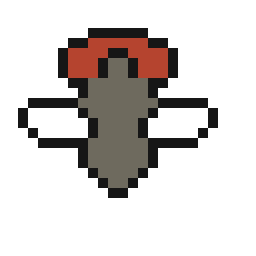

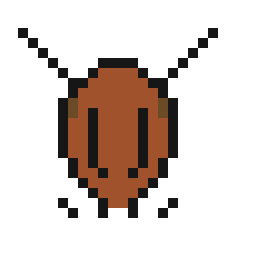
“There is a water bug in the basement” is one of the most common sentences in pest identification, and most of the time the animal in question is a cockroach. The nickname is old, regional and a little bit polite. The real water bugs live in ponds. This guide sorts out which one you have and what it means.
Why cockroaches get called water bugs
Several large cockroaches like water, and that is where the name comes from. Penn State Extension says the Oriental cockroach is often called a water bug because it prefers dark, damp, cool places: under sinks, in floor drains, crawl spaces and damp basements. It stays at or below ground level and is seldom found high on walls or on upper floors.
The American cockroach, card #144, is the other usual suspect. The University of Florida’s Featured Creatures profile describes it living mainly in basements, sewers, steam tunnels and drainage systems, and moving into homes from sewers through the plumbing. In the south it is often called a palmetto bug, though the same profile notes that name more properly belongs to the Florida woods cockroach.
So “water bug” is not a species. It is a description of where the cockroach was found.
How to tell them apart
| Giant water bug | Oriental cockroach | American cockroach | German cockroach | |
|---|---|---|---|---|
| Size | About 5–6 cm (2–2.5 in), sometimes more | About 2.5–3 cm (1–1.25 in) | About 4–5 cm (1.5–2 in) | About 1.3 cm (0.5 in) |
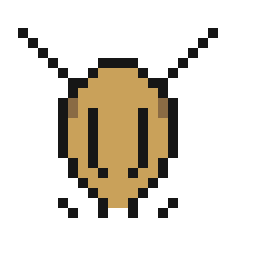
| Colour | Brown, flat, oval | Very dark brown to black, often shiny | Reddish brown, pale band around the plate behind the head | Light brown, two dark stripes behind the head |
| Front legs | Thick and grasping, like pincers | Slim, for running | Slim, for running | Slim, for running |
| Antennae | Very short, hard to see | Long and thread-like | Long and thread-like | Long and thread-like |
| Where | Ponds, lakes, streams; under lights at night | Drains, basements, crawl spaces | Sewers, drains, ground floors | Kitchens and bathrooms |
Cockroach sizes are from Penn State and UC IPM. For the giant water bug, Mississippi State gives up to about 2.5 inches for North American adults, while the University of Maine gives 2 to 4 inches; the smaller figure is the safer one to expect. Two features settle it quickly. A giant water bug has front legs built for grabbing, and antennae so short you will probably not notice them. Every cockroach has long, waving antennae, often as long as its body, and six similar legs built for speed.
Wings help too. Penn State notes that Oriental cockroach females have only small wing pads and the males’ wings cover about three-quarters of the body, and that neither sex flies. The American cockroach is fully winged; the UF profile notes that the male’s wings reach past the tip of its abdomen.
If you are still unsure, a photo in the identifier will name it and give its safety read, with how sure it is: Likely, Possible or Best guess.
What a real water bug is doing near your house
The giant water bug, card #116, is a true bug that lives in water and hunts there. Mississippi State University Extension describes it as strictly a meat-eater: it grabs prey with its front legs and feeds on insects, tadpoles, small fish and frogs. The University of Maine lists its other names, including toe-biter and electric-light bug, and notes that the adults fly and are drawn to lights at night, which is why they turn up in car parks and by porch lights.
That is the whole story of a giant water bug on your doorstep: it was flying between ponds on a summer night and the porch light pulled it in. It does not live in houses and it will not breed in your basement. iNaturalist research-grade records on card #116 are almost all from April to October, with peaks in April–May and again in August–October; May has around 60 times as many records as January. If you find one in winter, it is very unusual.
It can bite. Mississippi State says bites are rare, but people who have had one describe the pain as worse than any other insect sting or bite they know, though it passes quickly. So do not pick it up. Put a jar over it, slide a card underneath, and release it near water. It is a native predator and does no harm outdoors.
Front desk note: the giant water bug is the rare guest who arrives by air, refuses to unpack, and only wants directions to the nearest pond.
The backswimmer and the water strider are smaller true water bugs you will see on ponds and puddles. Neither comes indoors on purpose.
What a cockroach means for the house
A cockroach indoors is a different matter, and the answer depends on which one.
- Oriental cockroach: a sign of damp. Penn State notes that adults are mostly outdoors in warm weather, with numbers peaking in late spring or early summer, and that they may come inside during dry spells looking for humidity. They travel up from crawl spaces along plumbing and in under doors.
- American cockroach: usually a visitor from the drains or the yard. The UF profile notes it is rarely found in houses but can move in after heavy rain, and outdoors it lives in moist, shady places such as wood piles and mulch. iNaturalist research-grade records on card #144 stay high from April to November and are about 2.5 times more common in April than in January.
- German cockroach: the one that lives indoors for good. UC IPM calls it the most common indoor species in California, especially in flats and other shared buildings, favouring warm, humid spots near food in kitchens and bathrooms. On card #143 the records barely change through the year, with the busiest month under twice the quietest, which is what you would expect from an animal that lives in heated buildings.
UC IPM notes that cockroach droppings and shed skins are significant allergens and that infestations are linked with childhood asthma, so a regular cockroach problem is worth fixing rather than living with.
What to do
For cockroaches, start with the conditions, not the spray.
- Dry it out. Fix leaking pipes and taps, and pour water into unused floor drains so the trap stays full.
- Close the way in. Penn State recommends caulking cracks under sinks and around plumbing; UC IPM adds door sweeps, weather stripping and screens.
- Take away food and cover. Food in sealed containers, lidded bins, no stacks of cardboard in the basement.
- Measure. UC IPM suggests sticky traps to find where they are most active and to see whether things are improving.
- Baits, not fogs. UC IPM says baits give better control than sprays, and Penn State notes that indoor sprays and foggers do little against Oriental cockroaches and can scatter them. A large or persistent infestation is a job for a licensed professional.
For a true water bug, the jar and the door are all you need.
Our guides to kitchen bugs and bathroom bugs cover the other damp-room visitors, and the Field Guide has a page for each of the species here.
Sources
- Penn State Extension: Oriental Cockroaches
- University of Florida IFAS, Featured Creatures: American Cockroach, Periplaneta americana
- University of California IPM: Pest Notes: Cockroaches
- University of Maine Cooperative Extension: Giant Water Bug
- Mississippi State University Extension, Bug’s Eye View: Giant Water Bug
- Seasonal pattern: iNaturalist research-grade observations, as shown on card #144, card #116 and card #143
Questions
Is a water bug the same as a cockroach?
Usually, when people say it about something in the house, yes. "Water bug" is a nickname for cockroaches that like damp places, most often the Oriental cockroach; Penn State Extension notes the name comes from its liking for dark, damp, cool spots. A true water bug, such as the giant water bug, is a different insect that lives in ponds and streams.
How can I tell a giant water bug from a cockroach?
Look at the front legs and the antennae. A giant water bug has thick, grasping front legs like a pair of pincers and very short antennae tucked under the head, and it is flat and large, often around 5 cm (2 inches) long. A cockroach has long, thread-like antennae, slim running legs and a shield-like plate behind the head.
Why are there water bugs in my house?
If it is a cockroach, it came for moisture, food and shelter. UC IPM notes that Oriental cockroaches live in cool, damp places such as basements, drains and water meter boxes, and that American cockroaches come up from sewers and storm drains through damaged pipes, missing screens or dry drain traps. A giant water bug indoors is usually a lost flier that was drawn to a light at night.
Do water bugs bite?
Giant water bugs can. Mississippi State University Extension says bites are rare but very painful and short-lived, and they usually happen when someone handles one or wades barefoot. Move one with a jar or a cup rather than your hands. For any bite or skin reaction you are worried about, ask a doctor.
How do I get rid of water bugs in the basement?
For cockroaches, take away the damp and the way in: fix leaks, keep floor drains filled with water, seal cracks around pipes and under doors, and clear cardboard and clutter. UC IPM recommends baits over sprays, and Penn State notes that indoor sprays and foggers do little against Oriental cockroaches and can scatter them. A true giant water bug can simply be carried outside and released near water.
 German Cockroach#143
 Silverfish#140
 Common Earwig#139
 Caddisfly#138